 Skip to content
 When people walk through a school, hospital, shopping mall, office building, or airport, they rarely notice the hardware installed on emergency exit doors. Yet one of the most important innovations in modern building safety is mounted on nearly every commercial exit—the exit device.
Commonly known as a panic bar, crash bar, or panic exit device, an exit device allows people to open an emergency exit door by simply pushing a horizontal bar. This intuitive design enables fast, safe evacuation during emergencies such as fires, earthquakes, or power failures, helping to prevent injuries and save lives.
The history of exit devices is closely linked to some of the world’s most tragic crowd disasters. These events exposed the dangers of poorly designed exits and inspired engineers, manufacturers, and lawmakers to develop safer emergency egress solutions. Over the past century, exit devices have evolved from simple mechanical hardware into sophisticated systems integrated with fire protection, electronic access control, and smart building technologies.
Today, exit devices are an essential component of commercial buildings, ensuring compliance with life safety regulations while balancing security, accessibility, and convenience. In this article, we’ll explore how exit devices were invented, how they have evolved, and why they remain one of the most important pieces of commercial door hardware.
What Is an Exit Device?
An exit device is a mechanical or electrified door hardware system installed on emergency exit doors. Unlike traditional locks that require turning a handle or using a key, an exit device unlocks the door when pressure is applied to the push bar, allowing occupants to leave the building quickly and safely.
Exit devices are widely used in:
- Schools and universities
- Hospitals and healthcare facilities
- Office buildings
- Hotels
- Shopping centers
- Airports
- Industrial facilities
- Stadiums and entertainment venues
- Government buildings
Their primary purpose is simple: allow immediate exit while maintaining security from the outside.
Following the disaster, governments introduced stricter building codes and increased attention was given to emergency exit hardware.
| Year | Event | Impact |
| 1883 | Victoria Hall Disaster | Highlighted the dangers of blocked exits. |
| 1903 | Iroquois Theatre Fire | Led to stricter fire safety regulations. |
| Early 1900s | First commercial panic hardware developed | Improved emergency evacuation. |
| Mid-1900s | Building codes adopted panic hardware requirements | Increased use in commercial buildings. |
| 1970s–1990s | Fire-rated and electrified exit devices introduced | Enhanced safety and security. |
| Today | Smart exit devices integrated with access control | Improved monitoring and building management. |
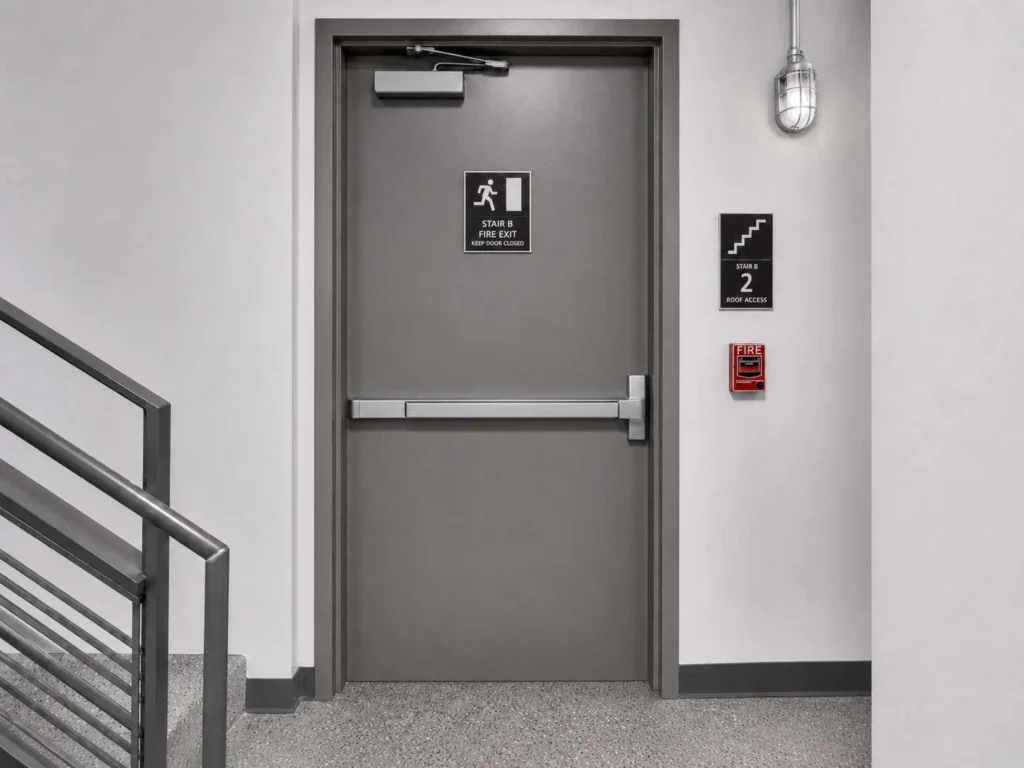
The Evolution of Exit Devices
The first exit devices were surprisingly simple. Engineers recognized that people instinctively push against a door during an emergency, so they designed a horizontal bar that released the latch with a single movement.
This eliminated the need to search for a doorknob, turn a key, or manipulate complicated locks during a crisis.
Over the following decades, manufacturers continued improving the design.
Important developments included:
- Stronger steel components
- More durable latch mechanisms
- Fire-rated designs
- Corrosion-resistant finishes
- ADA-compliant operation
- Electrified locking systems
- Integration with access control
As commercial buildings became larger and more sophisticated, exit devices also evolved to meet higher standards for durability, security, and life safety.
Today, many exit devices can communicate with access control systems, allowing building managers to monitor door status, control access remotely, and maintain secure emergency exits.
Types of Exit Devices
Not every building has the same security requirements. As a result, manufacturers developed several different types of exit devices.
| Type | Best Application | Advantages |
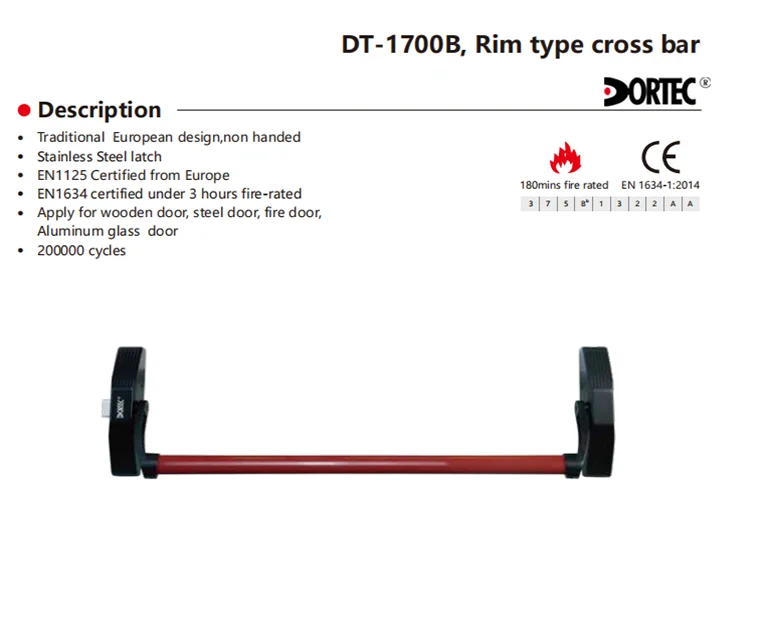
| Rim Exit Device | Single doors | Easy installation, cost-effective, reliable |
| Surface Vertical Rod Exit Device | Double doors | Secure top and bottom latching |
| Concealed Vertical Rod Exit Device | Premium commercial buildings | Cleaner appearance, concealed rods |
| Mortise Exit Device | High-end commercial entrances | Elegant design with excellent security |
| Electrified Exit Device | Smart buildings | Integrates with access control and monitoring systems |
Each type offers unique advantages depending on the building’s occupancy, security requirements, and architectural design.

Safety Standards Around the World
Modern exit devices must comply with rigorous safety standards to ensure reliable operation during emergencies.
| Standard | Region | Purpose |
| ANSI/BHMA | North America | Performance and durability testing |
| UL 305 | North America | Fire and panic hardware certification |
| NFPA 101 | United States | Life Safety Code for emergency egress |
| IBC | International | Building code requirements |
| EN 1125 | Europe | Panic exit devices for public buildings |
| EN 1634 | Europe | Emergency exit devices for trained occupants |
Compliance with these standards ensures that exit devices function properly under demanding conditions and meet legal requirements for commercial construction.
Why Exit Devices Matter Today?
Modern buildings face a dual challenge: they must remain secure against unauthorized entry while allowing occupants to exit immediately during an emergency.
Exit devices successfully achieve this balance.
Today’s exit devices provide:
- Fast emergency evacuation
- Reliable security
- Fire safety compliance
- Accessibility for all users
- Long service life
- Compatibility with electronic access control systems
Whether installed in a school, hospital, airport, or office building, exit devices continue to protect millions of people every day.
Frequently Asked Questions
Who invented the exit device?
The first commercial panic hardware was developed in the early 20th century as manufacturers responded to growing concerns about crowd safety following several tragic building disasters.
Why is it called a panic bar?
The name comes from its purpose—allowing people to open exit doors quickly during moments of panic without needing to operate a traditional lock.
What is the difference between a panic bar and an exit device?
“Panic bar” refers to the push bar itself, while “exit device” is the broader industry term for the complete door hardware assembly.
Are exit devices required by law?
In many countries, yes. Building and fire codes often require exit devices on doors serving assembly occupancies, schools, healthcare facilities, and other commercial buildings where rapid evacuation is essential.
How long do exit devices last?
A high-quality exit device can provide many years of reliable service when properly installed and maintained. Regular inspections and maintenance help ensure continued compliance with safety regulations.
Conclusion
The history of exit devices demonstrates how innovation can transform public safety. From the tragic crowd disasters of the late nineteenth century to today’s intelligent access-controlled buildings, the evolution of exit devices reflects more than a century of engineering improvements, stricter safety standards, and a shared commitment to protecting lives.
Modern exit devices are no longer simple pieces of door hardware. They are an integral part of comprehensive building safety systems, combining reliable emergency egress with advanced security, fire protection, and accessibility features. As smart buildings continue to evolve, exit devices will remain a critical component in ensuring that people can leave a building safely whenever an emergency occurs.
Why Choose DORTEC Hardware for Exit Devices?
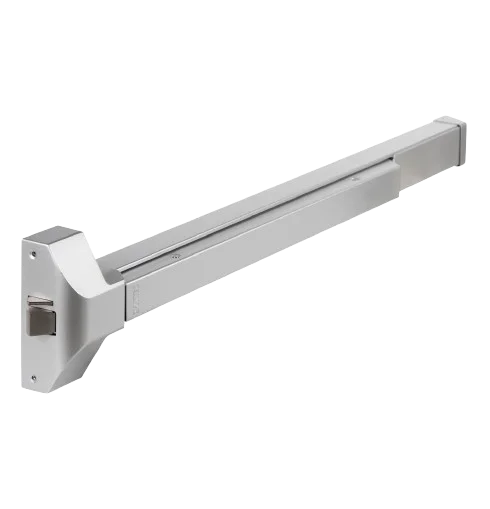
Selecting the right exit device is essential for both safety and long-term performance. As a professional exit device manufacturer and commercial door hardware supplier, ESTAR Hardware provides high-quality panic hardware solutions designed to meet the demanding requirements of commercial, institutional, and industrial applications.
Our product range includes rim exit devices, vertical rod exit devices, concealed vertical rod exit devices, mortise exit devices, all manufactured with durability, smooth operation, and code compliance in mind. Whether you are sourcing hardware for schools, hospitals, hotels, office buildings, or public facilities, our experienced team can help you find the right solution for your project.
Contact Dortec Hardware today to learn more about our complete range of commercial exit devices and discover how our reliable door hardware solutions can enhance the safety, security, and performance of your buildings.

