 Skip to content
 Exit devices are essential components of commercial door systems, providing safe and efficient egress during emergencies while maintaining security during normal operation. Commonly installed in schools, hospitals, office buildings, shopping centers, warehouses, airports, and public facilities, exit devices must operate reliably every time they are used.
Because these devices often experience hundreds or even thousands of operating cycles each day, wear and tear is inevitable. Over time, issues such as latch failures, sticking push bars, rod misalignment, corrosion, and loose hardware can affect performance. If left unresolved, these problems may compromise building security, reduce user safety, and even lead to failed fire or life-safety inspections.
Fortunately, most exit device issues can be identified early and corrected through proper troubleshooting and preventive maintenance. Understanding the causes of common failures can help facility managers, contractors, maintenance teams, and building owners keep doors functioning smoothly while extending hardware lifespan.
This guide explores ten of the most common exit device problems, their causes, practical solutions, and maintenance recommendations to ensure reliable operation.
Common Exit Device Problems at a Glance
| Problem | Common Cause | Recommended Solution |
| Exit device won’t latch | Strike plate misalignment | Adjust strike plate and door alignment |
| Hard to push | Dirt or worn components | Clean and lubricate moving parts |
| Push bar sticks | Damaged spring | Replace spring and inspect mechanism |
| Door won’t open | Broken latch assembly | Repair or replace latch components |
| Vertical rods won’t retract | Rod misalignment | Adjust or replace rods |
| Dogging doesn’t work | Worn dogging mechanism | Replace damaged parts |
| Excessive noise | Lack of lubrication | Lubricate and tighten hardware |
| Loose exit device | Loose mounting screws | Tighten and reinforce mounting points |
| Failed inspection | Non-compliant hardware | Replace with certified components |
| Corrosion and rust | Moisture exposure | Use corrosion-resistant materials |
What Is an Exit Device?
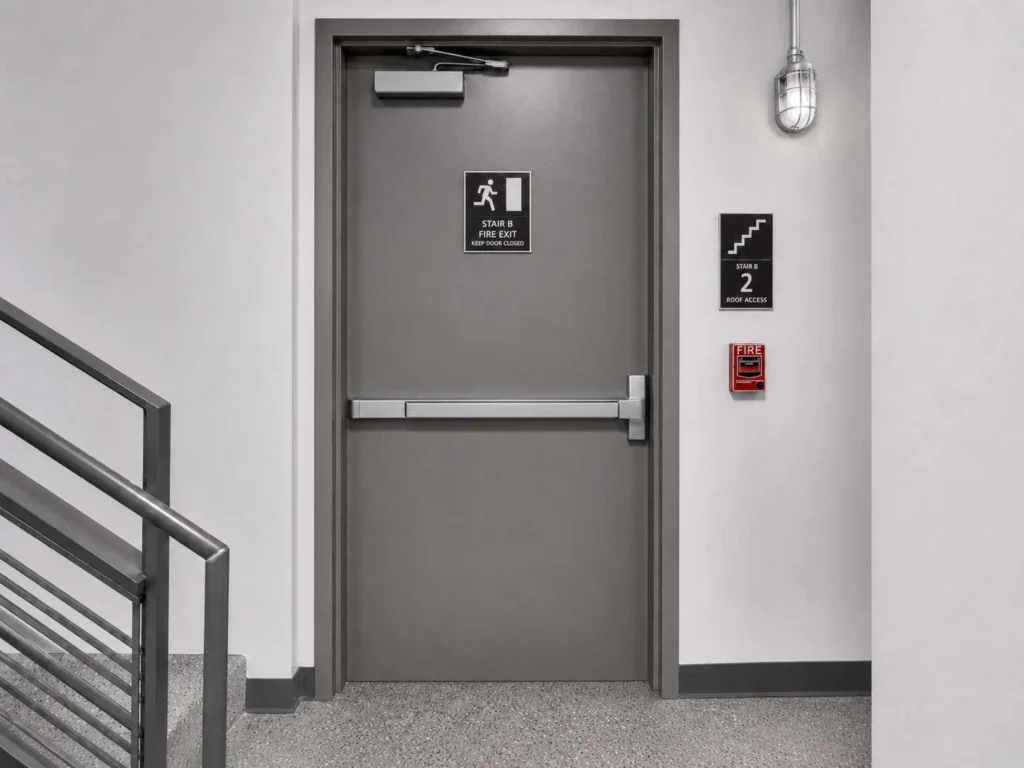
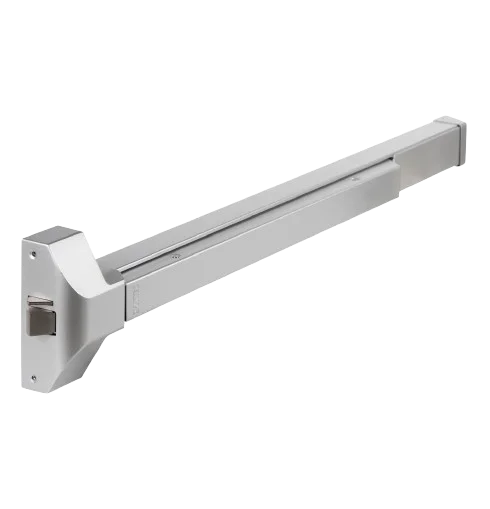
An exit device is a door hardware mechanism that allows occupants to open a door quickly by pushing a horizontal bar. When pressure is applied, the latch retracts and the door opens, providing fast and safe egress.
Exit devices are often required by building and fire codes for commercial buildings with high occupant loads. They are especially important in facilities where rapid evacuation may be necessary during emergencies.
Main Components of an Exit Device
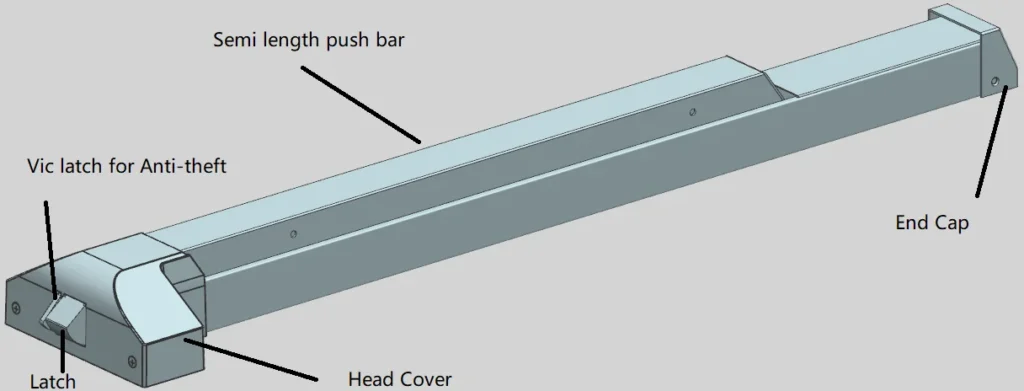
Most commercial exit devices consist of:
- Push bar assembly
- Latch bolt
- Strike plate
- Internal operating mechanism
- Return springs
- Mounting brackets
- Dogging mechanism (on applicable models)
- Vertical rods (for vertical rod exit devices)
Each component must function correctly to ensure smooth operation.
Why Exit Devices Develop Problems?
Even high-quality commercial hardware can develop issues over time.
Heavy Daily Traffic
A busy commercial entrance may experience thousands of operating cycles every month. Continuous use gradually wears internal components and can loosen hardware.
Exit Device under improper Installation
Incorrect installation is one of the leading causes of premature exit device failure. Even minor alignment errors can create excessive stress on moving parts.
Lack of Maintenance
Dust, debris, and accumulated dirt can interfere with internal mechanisms and increase operating force.
Environmental Exposure
Exterior doors are exposed to moisture, temperature fluctuations, UV radiation, and corrosive environments that can accelerate wear.
Inferior Product Quality of panic hardware
Low-quality hardware may use weaker materials, lower-grade springs, and less durable finishes, resulting in shorter service life.
Working with an experienced exit device supplier can help ensure that commercial projects receive hardware designed for long-term durability and code compliance.
Problem #1: Exit Device Won’t Latch Properly
One of the most frequently reported issues occurs when the latch bolt fails to engage the strike plate after the door closes. A door that does not latch properly creates both security and operational concerns.
Common Causes
Strike Plate Misalignment
Over time, vibration and repeated use can cause the strike plate to shift slightly out of position.
Door Sagging
Worn hinges may allow the door to drop, preventing proper latch engagement.
Loose Mounting Screws
Fasteners can loosen gradually due to frequent operation.
Building Movement
Natural building settlement can affect frame and door alignment.
Warning Signs
- Door bounces open after closing
- Door requires slamming to latch
- Visible gap between latch and strike
- Inconsistent latching performance
How to Fix It?
Inspect the strike plate and verify that the latch enters the opening correctly. Tighten loose screws and adjust the strike position if necessary. If door sagging is present, inspect hinges and replace worn components.
Repair or Replace?
In most cases, latching problems can be resolved through adjustment rather than complete replacement. However, severely worn latch assemblies may require new hardware.
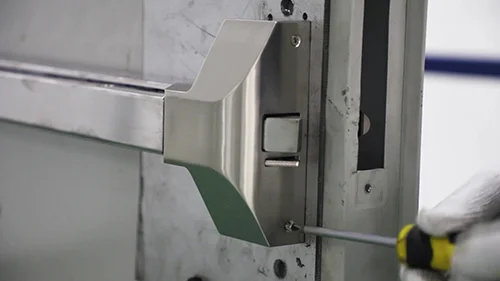
Problem #2: Panic Exit Device Is Hard to Push
A properly functioning exit device should require minimal force to operate. Excessive resistance can create accessibility concerns and increase wear on the hardware.
Common Causes
Dirt and Debris
Dust accumulation inside the mechanism increases friction.
Lack of Lubrication
Moving components may become stiff when lubrication is absent.
Worn Internal Components
Springs and pivots eventually wear after years of use.
Bent Components
Impact damage may distort operating parts.
Warning Signs
- Increased operating force
- Jerky movement
- Delayed latch retraction
- User complaints
Solution:
Clean the mechanism thoroughly and apply manufacturer-approved lubricant. Inspect internal parts for wear and replace damaged components as needed.
Problem #3: Exit Device Sticks After Activation
A sticking push bar is both inconvenient and potentially hazardous during emergency situations.
Common Causes
- Broken return spring
- Internal debris accumulation
- Worn linkage components
- Improper installation alignment
Warning Signs
- Push bar remains partially depressed
- Delayed return action
- Uneven movement
How to Fix It
Remove debris, inspect spring tension, and replace worn linkage components. Verify that the device is mounted correctly and not under stress.
Problem #4: Door Won’t Open When the Exit Device Is Pressed
This is one of the most serious exit device failures because it directly impacts emergency egress.
Common Causes
- Broken latch assembly
- Damaged internal linkage
- Corrosion inside the mechanism
- Vertical rod adjustment problems
How to Fix It
Inspect the latch operation and verify that pressing the push bar fully retracts the latch. Replace damaged internal components immediately.
Problem #5: Vertical Rod Exit Device Won’t Retract Properly
Vertical rod exit devices use top and bottom latching points, making adjustment especially important.
Common Causes
- Rod misalignment
- Bent rods
- Incorrect rod length adjustment
- Damaged top or bottom latch
How to Fix It
Adjust rod length according to manufacturer specifications and replace bent components.
Problem #6: Dogging Mechanism Doesn’t Work
The dogging feature allows the latch to remain retracted during high-traffic periods.
Common Causes
- Worn dogging components
- Damaged dogging socket
- Internal mechanical failure
How to Fix It
Inspect the dogging assembly and replace worn parts to restore operation.
Problem #7: Excessive Noise During Operation
Grinding, squeaking, or rattling noises often indicate maintenance issues.
Common Causes
- Dry moving parts
- Loose fasteners
- Worn latch components
How to Fix It
Lubricate moving components and tighten all mounting hardware.
Problem #8: Loose Exit Device Assembly
A loose exit device can affect reliability and appearance.
Common Causes
- High traffic usage
- Improper installation
- Door material movement
How to Fix It
Tighten fasteners and reinforce mounting points where necessary.
Problem #9: Fire-Rated Exit Device Fails Inspection
Fire-rated openings must comply with strict code requirements.
Common Causes
- Unauthorized modifications
- Missing components
- Damaged labels
- Non-compliant replacement parts
How to Fix It
Verify all components meet certification requirements and replace non-compliant hardware.
Problem #10: Corrosion and Rust
Exterior doors face constant exposure to moisture and environmental contaminants.
Common Causes
- Coastal environments
- Industrial pollution
- Water intrusion
- Poor material selection
How to Fix It
Use stainless steel exit devices and establish regular cleaning schedules.
Exit Device Maintenance Schedule
| Maintenance Task | Monthly | Quarterly | Annually |
| Check latch operation | ✓ | ✓ | ✓ |
| Tighten fasteners | ✓ | ✓ | ✓ |
| Clean push bar | ✓ | ✓ | ✓ |
| Lubricate moving parts | ✓ | ✓ | |
| Inspect dogging mechanism | ✓ | ✓ | |
| Check vertical rods | ✓ | ✓ | |
| Full inspection | ✓ | ||
| Replace worn parts | ✓ |
Repair or Replace?
| Condition | Repair | Replace |
| Loose screws | ✓ | |
| Strike plate adjustment | ✓ | |
| Minor rod alignment issue | ✓ | |
| Broken spring | ✓ | |
| Severe corrosion | ✓ | |
| Cracked housing | ✓ | |
| Obsolete model | ✓ | |
| Failed fire-rating compliance | ✓ |
How to Choose an Exit Device Supplier
When selecting an exit device supplier, consider product certifications, durability testing, manufacturing experience, technical support, and customization capabilities. A reliable supplier should provide ANSI/BHMA-compliant products, fire-rated options, and consistent quality control.
At DORTEC, we manufacture commercial-grade exit devices designed for high-traffic applications, including office buildings, schools, hospitals, hotels, retail centers, and industrial facilities. Our product range includes rim exit devices, vertical rod exit devices, concealed vertical rod exit devices, and fire-rated exit devices that meet the requirements of modern commercial projects.
Why Partner With Us?
- More than 20 years of door hardware manufacturing experience
- ANSI/BHMA and fire-rated product options
- Stainless steel and heavy-duty commercial-grade construction
- OEM and ODM customization services
- Competitive factory-direct pricing
- Strict quality control and durability testing
- Fast production and global shipping support
Whether you need standard models or customized solutions for your market, our team is ready to help.
Conclusion
Exit devices are critical life-safety products that must function reliably under all conditions. By understanding common exit device problems and implementing preventive maintenance practices, building owners and facility managers can reduce downtime, improve security, and extend hardware lifespan. Choosing quality products from a trusted exit device supplier further helps ensure long-term performance and compliance.
