 Skip to content
 Introduction
Choosing the right door closer may seem like a small detail, but in reality, it plays a critical role in the safety, functionality, and longevity of any door system. Whether you are working on a residential renovation, a commercial building, or a large-scale architectural project, selecting the appropriate type of door closer can significantly impact performance and user experience.
Among the various options available in the market, pneumatic door closers and hydraulic door closers are the two most widely used types. While both serve the same fundamental purpose—automatically closing a door—they differ greatly in structure, performance, durability, and application.
In this guide, we will provide a detailed comparison of pneumatic vs hydraulic door closers, helping you determine which solution is best suited for your specific project.
What Is a Pneumatic Door Closer?
A pneumatic door closer operates using air pressure. Inside the cylinder, air is compressed when the door is opened. As the door closes, the compressed air is released gradually, controlling the closing speed.
Key Features
• Simple internal structure
• Lightweight design
• Cost-effective solution
• Limited adjustability
Typical Applications
Pneumatic door closers are commonly used in:
• Storm doors
• Screen doors
• Residential light-duty doors
They are ideal for environments where door usage is relatively low and heavy-duty performance is not required.
How do hydraulic door closers work?
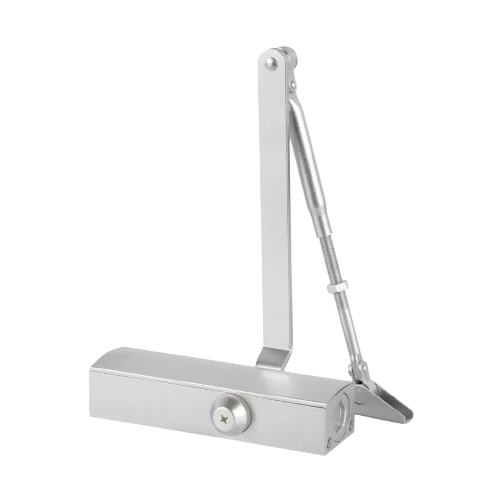
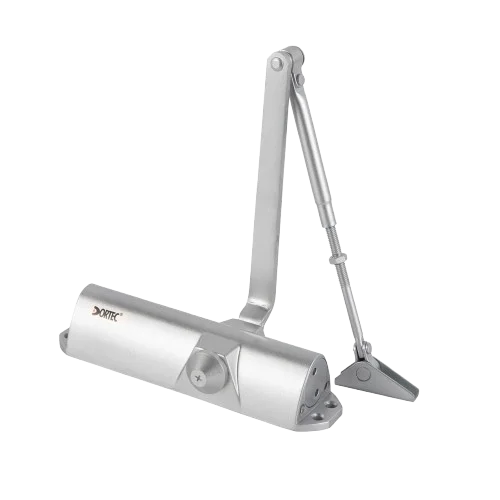
Hydraulic door closer use fluid (oil) to regulate door movement. When the door is opened, hydraulic fluid flows through internal valves, creating resistance. This allows for smooth, controlled closing and precise speed adjustment.
Key Features
• Smooth and controlled operation
• Adjustable closing and latching speed
• High durability and long lifespan
• Suitable for heavy-duty applications
Typical Applications
Hydraulic door closers are widely used in:
• Commercial buildings
• Office entrances
• Glass door systems
• Fire-rated doors
• High-traffic areas
They are considered the industry standard for professional and commercial environments.
Pneumatic vs Hydraulic Door Closers: Key Differences
Choosing between pneumatic and hydraulic door closers becomes much easier when you compare them side by side.
| Feature | Pneumatic Door Closer | Hydraulic Door Closer |
| Working Medium | Air | Oil (Hydraulic fluid) |
| Closing Control | Basic | Precise and adjustable |
| Durability | High | Low to medium |
| Door Weight | Light doors only | Medium to heavy doors |
| Cost | Lower | Higher |
| Applications | Residential | Commercial & industrial |
| Fire-Rated Doors | Not suitable | Suitable |
From this comparison, it’s clear that pneumatic door closers are designed for simplicity and affordability, while hydraulic door closers offer performance, reliability, and control.
Advantages and Disadvantages
Pneumatic Door Closer
Advantages
• Affordable and budget-friendly
• Easy to install and maintain
• Suitable for lightweight doors
Disadvantages
• Limited control over closing speed
• Less durable under frequent use
• Performance can be affected by temperature changes
• Not suitable for commercial or heavy doors
Hydraulic Door Closer
Advantages
• Smooth and consistent closing performance
• Adjustable speed and latching control
• Highly durable and long-lasting
• Suitable for high-traffic environments
• Compatible with fire-rated doors
Disadvantages
• Higher initial cost
• Requires proper installation and adjustment
Which Door Closer Is Better for Your Project?
There is no one-size-fits-all answer. The best choice depends entirely on your application.
Choose a Pneumatic Door Closer If:
• The project is residential
• Door weight is light
• Traffic is low
• Budget is limited
• Installation simplicity is a priority

Choose a Hydraulic Door Closer If:
• The project is commercial or industrial
• Doors are heavy or made of glass
• The environment has high traffic
• Fire safety compliance is required
• You need smooth and adjustable closing
In most professional projects, hydraulic door closers are the preferred solution due to their reliability and performance.
Industry Applications and Recommendations
Understanding where each type performs best can help you make a more confident decision.
• Residential housing → Pneumatic door closers
• Office buildings → Hydraulic door closers
• Retail stores → Hydraulic door closers
• Hospitals and schools → Hydraulic door closers
• Glass door systems → Hydraulic door closers
• Fire-rated doors → Hydraulic door closers only
This trend clearly shows that hydraulic systems dominate in modern construction and commercial applications.
Why Hydraulic Door Closers Are Preferred in Modern Projects
In today’s construction and architectural environment, hydraulic door closers have become the dominant choice—and for good reason.
• They provide better safety and control
• They meet international standards and compliance requirements
• They offer longer service life, reducing replacement costs
• They enhance user experience with smooth operation
For contractors, distributors, and project managers, hydraulic door closers represent a more reliable long-term investment.
How to fix hydraulic door closer?
Installation Tips
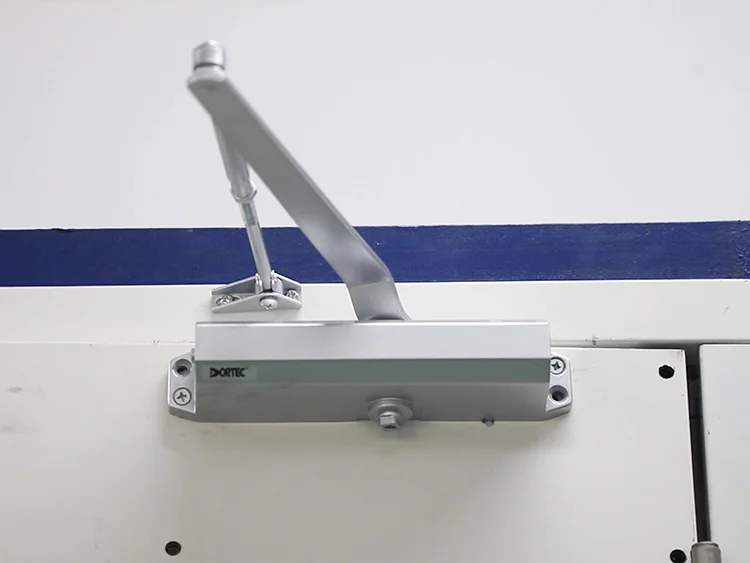
• Ensure proper mounting position (parallel arm, standard arm, or top jamb)
• Align the closer correctly with the door and frame
• Follow manufacturer specifications carefully
Maintenance Tips
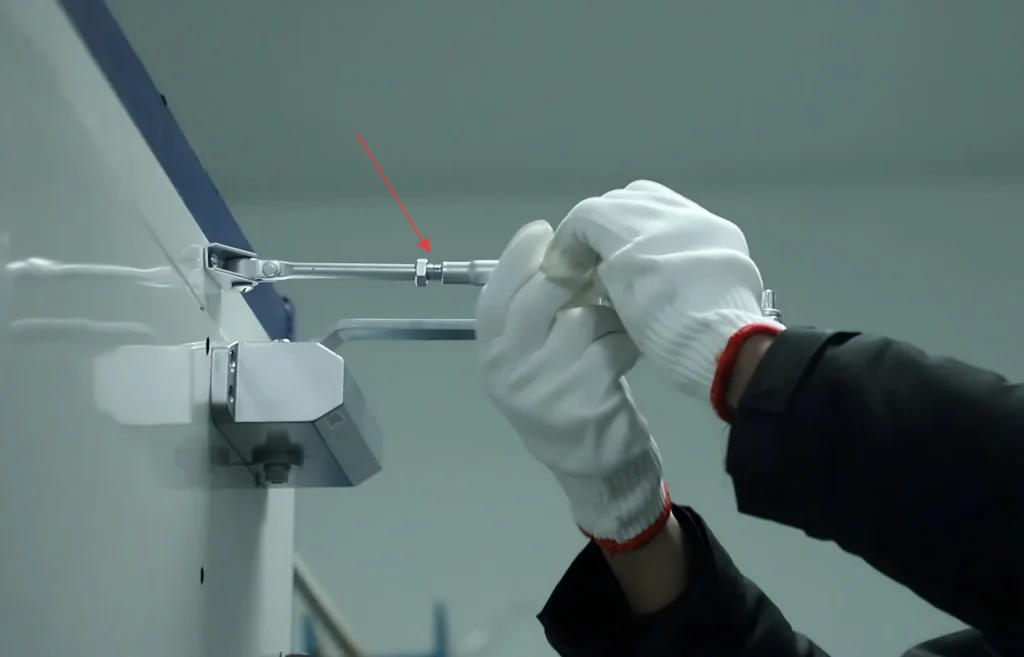
• Regularly check and adjust closing speed
• Inspect for air leaks in pneumatic closers
• Inspect for oil leaks in hydraulic closers
• Tighten screws and mounting hardware periodically
Proper installation and maintenance will significantly extend the lifespan of any door closer.
Common Mistakes to Avoid When Choosing a Door Closer
Many buyers make avoidable mistakes that lead to poor performance or higher long-term costs.
• Choosing based on price alone
• Ignoring door weight and size
• Using pneumatic closers for commercial applications
• Overlooking certification requirements (CE, UL)
• Improper installation
Avoiding these mistakes will ensure better performance and customer satisfaction.
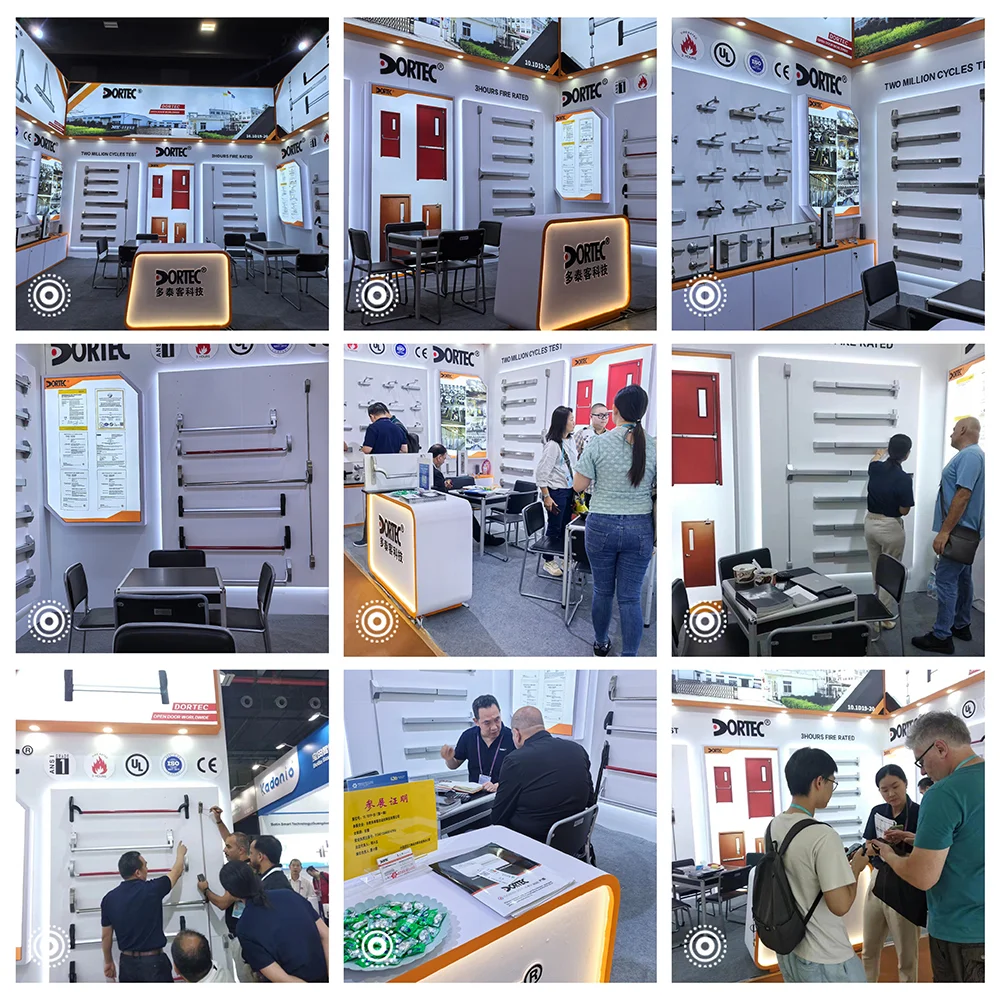
Why Choose DORTEC Door Closers?
If you are sourcing door closers for commercial or large-scale projects, choosing the right supplier is just as important as choosing the right product.
DORTEC offers:
• OEM & ODM customization services
• Strict quality control and testing
• Compliance with international standards (CE, UL)
• A wide range of solutions for fire doors and commercial applications
• Extensive experience in global projects
Whether you need standard products or customized solutions, DORTEC can support your business with reliable and high-performance door closer systems.
Frequently Asked Questions (FAQ)
1. What is the main difference between pneumatic and hydraulic door closers?
The main difference lies in the working mechanism. Pneumatic door closers use air pressure to control door movement, while hydraulic door closers use oil, allowing for smoother and more precise control.
2. Which door closer is more durable?
Hydraulic door closers are significantly more durable because they are designed for heavy-duty and high-frequency use, especially in commercial environments.
3. Are pneumatic door closers suitable for commercial use?
No, pneumatic door closers are generally not suitable for commercial applications. They are best used for residential or light-duty doors.
4. Can hydraulic door closers be used on glass doors?
Yes, hydraulic door closers are widely used for glass doors, especially in offices, retail stores, and commercial buildings.
5. Which door closer is better for fire-rated doors?
Hydraulic door closers are the correct choice for fire-rated doors because they provide controlled closing and meet safety compliance requirements.
6. Why are hydraulic door closers more expensive?
They use more advanced internal mechanisms, offer better performance, and have a longer lifespan, making them a higher-value investment.
They use more advanced internal mechanisms, offer better performance, and have a longer lifespan, making them a higher-value investment.
7.How long do hydraulic door closers last?
Hydraulic door closers typically last 7–10 years, while high-quality models can last 10–20 years with proper installation and maintenance
Conclusion
Both pneumatic and hydraulic door closers serve the same basic function, but their performance and applications differ significantly.
• Pneumatic door closers are best for light-duty residential use
• Hydraulic door closers are ideal for commercial, heavy-duty, and high-traffic environments
If your project demands durability, safety, and professional performance, hydraulic door closers are the clear choice.
