 Skip to content
 Introduction
Fire safety in modern buildings is not just about installing fire-rated doors—it’s about ensuring every component in the system works together under emergency conditions. Among these components, the door closer is often overlooked, yet it plays a decisive role in whether a fire door performs as intended.
A fire-rated door that fails to close properly is essentially useless during a fire. Smoke and flames can spread rapidly through open doorways, compromising escape routes and increasing the risk of damage and injury. This is why most fire safety regulations require fire doors to be self-closing or automatic-closing, making door closers a critical part of the system.
For B2B buyers—such as hardware distributors, construction contractors, and project managers—understanding how to select the right fire-rated door closer is essential. Choosing the wrong product can lead to:
• Project rejection during inspection
• Increased liability
• Higher maintenance costs
• Safety compliance issues
In this comprehensive guide, we’ll cover everything you need to know, including:
• Why fire-rated door closers are essential
• Key international standards and compliance requirements
• Types of door closers used on fire doors
• Technical selection criteria
• Common mistakes to avoid
• Maintenance and inspection best practices
1.Why Door Hardware Closers Are Essential for Fire-Rated Doors?
Fire-rated doors are designed to compartmentalize fire, slowing its spread and protecting occupants. However, this function depends entirely on one critical factor: the door must be fully closed.
1.1 The Role of Self-Door Hardware Closer Mechanisms
A door closer ensures that:
• The door automatically returns to the closed position after use
• The door latches securely into the frame
• The closing speed is controlled to prevent slamming
Without a closer, doors are often left open—especially in high-traffic environments like offices, hospitals, and industrial facilities.
1.2 Fire and Smoke Containment
In a fire scenario:
• Open doors allow smoke to spread rapidly
• Smoke inhalation is often more dangerous than flames
• Fire compartments become ineffective
A properly functioning door closer ensures that:
• Fire doors close even if no one is present
• Escape routes remain protected
• Fire spread is delayed
1.3 Code Compliance Requirements
Most building codes and fire regulations require fire doors to be:
• Self-closing (via door closer)
• Automatic-closing (connected to fire alarm systems)
This makes door closers not just a recommendation—but a mandatory safety component in most fire door installations.
2.Fire Door Closer Standards and Certifications
For B2B buyers, certification is one of the most critical purchasing factors. Using non-compliant products can lead to serious consequences.
2.1 Key International Standards
EN 1154 (Europe)
This standard specifies requirements for:
• Controlled door closing devices
• Durability (cycle testing)
• Closing force (EN size classification)
UL 10C (United States)
Focuses on:
• Fire resistance performance
• Positive pressure fire testing
• Real fire condition simulation
NFPA 80 (United States)
Covers:
• Installation requirements
• Inspection and maintenance
• Operational performance
EN 1634 / BS EN 1634
Defines:
• Fire resistance testing of door assemblies
• Performance under fire exposure
2.2 What Makes a Door Closer “Fire-Rated”?
A fire-rated door closer must:
• Be tested as part of a fire door assembly
• Maintain functionality under high temperatures
• Ensure consistent closing performance
• Use materials resistant to heat and deformation
2.3 Certification Importance for B2B Buyers
For distributors and project suppliers:
• Certified products increase approval rates
• Reduce risk of rejection during inspection
• Improve brand credibility
3.Types of Door Closers for Fire-Rated Doors
Different projects require different closer types. Understanding these options helps you recommend the right solution.
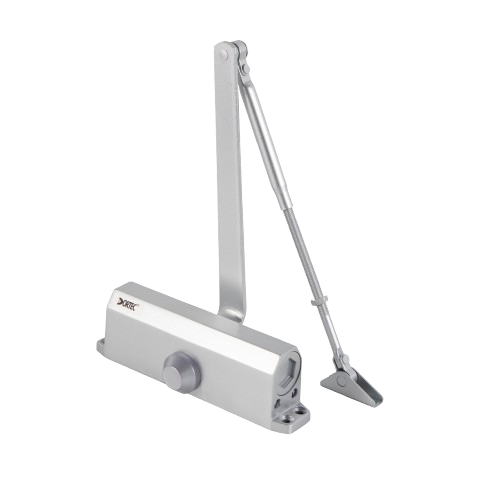
3.1 Surface Mounted Door Closers
The most commonly used type worldwide.
Features:
• Installed on the surface of the door or frame
• Easy to install and adjust
• Cost-effective
Advantages:
• Suitable for retrofitting
• Wide range of models available
• Easy maintenance
Applications:
• Commercial buildings
• Schools
• Industrial facilities
3.2 Concealed Door Closers
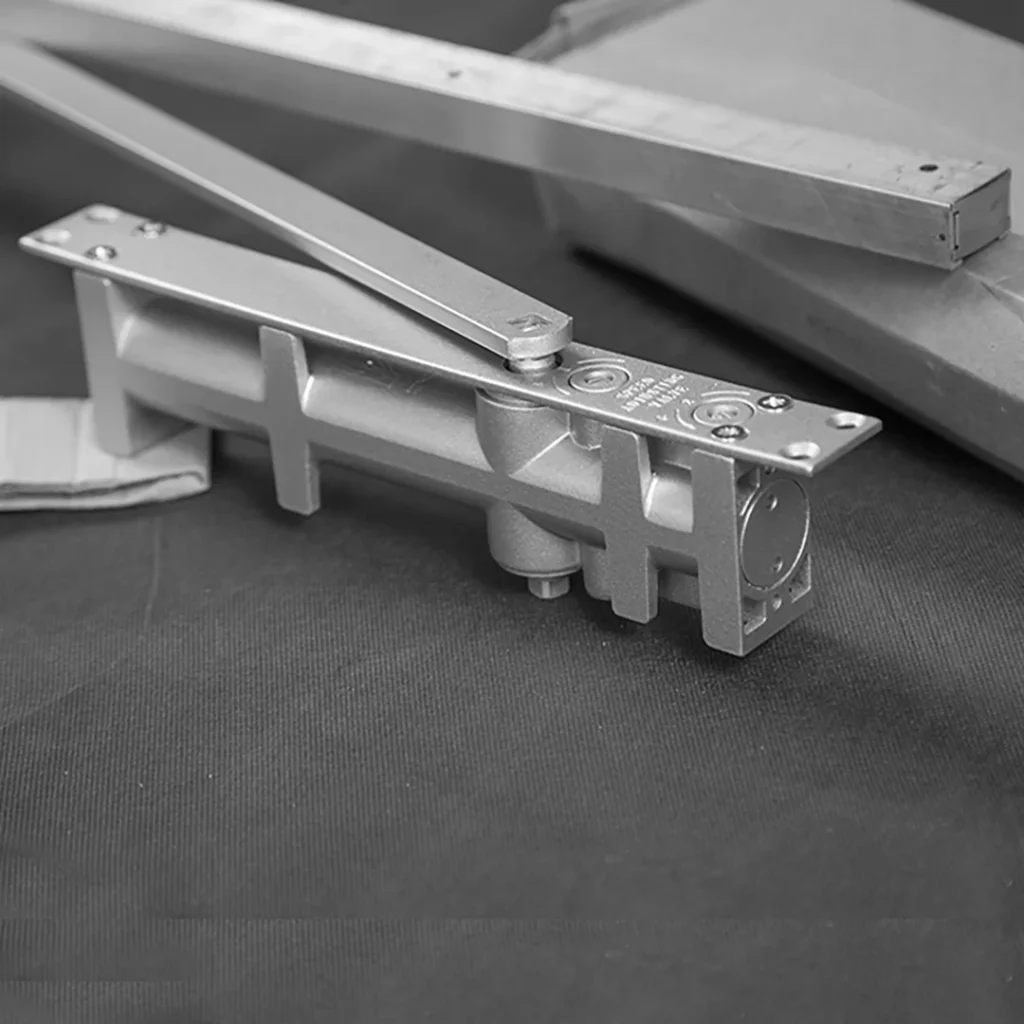
Hidden inside the door or frame.
Features:
• Invisible when the door is closed
• Clean, aesthetic appearance
Advantages:
• Ideal for premium architectural projects
• No visible hardware
Limitations:
• More complex installation
• Higher cost
Applications:
• Hotels
• High-end offices
• Designer interiors
3.3 Floor Spring Door Closers
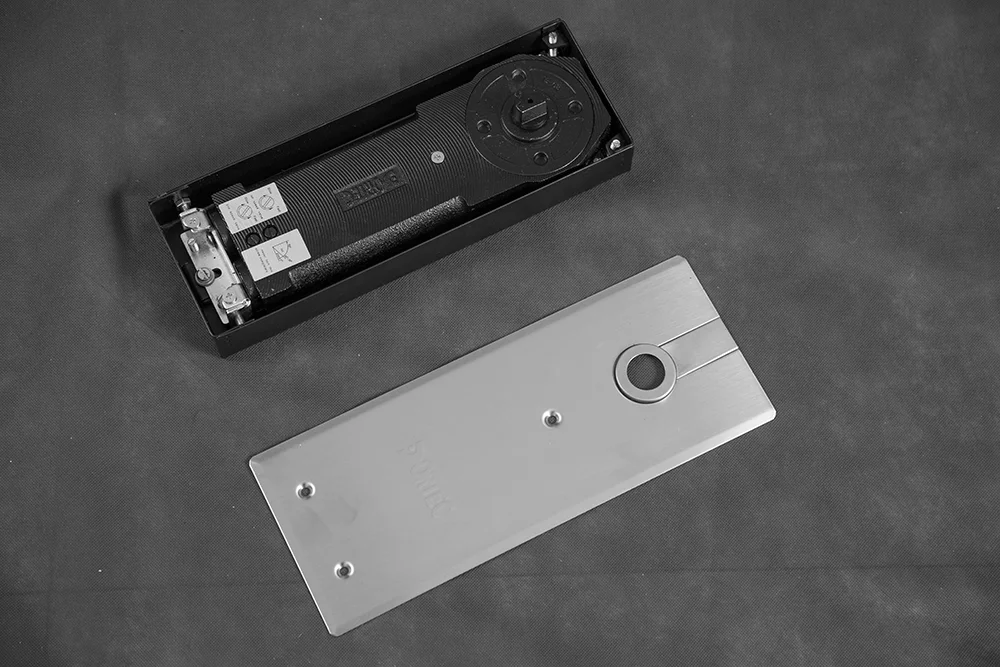
Installed in the floor, often used with glass doors.
Features:
• Supports heavy doors
• Allows double-action opening
• Smooth operation
Advantages:
• High load capacity
• Durable in high-traffic areas
Applications:
• Glass fire doors
• Commercial entrances
• Shopping malls
4.Fire-Rated vs Standard Door Closers
Understanding the difference is critical for avoiding costly mistakes.
| Feature | Fire Rated Closer | Standard Closer |
| Certification | Required | Not required |
| Heat Resistance | High | Limited |
| Safety Role | Critical | General use |
| Compliance | Mandatory | Optional |
Key Insight
Using a non-fire-rated closer on a fire door can:
• Void fire certification
• Lead to legal liability
• Cause project failure
5.How to Choose the Right Fire Door Closer?
Selecting the correct closer involves multiple technical factors.
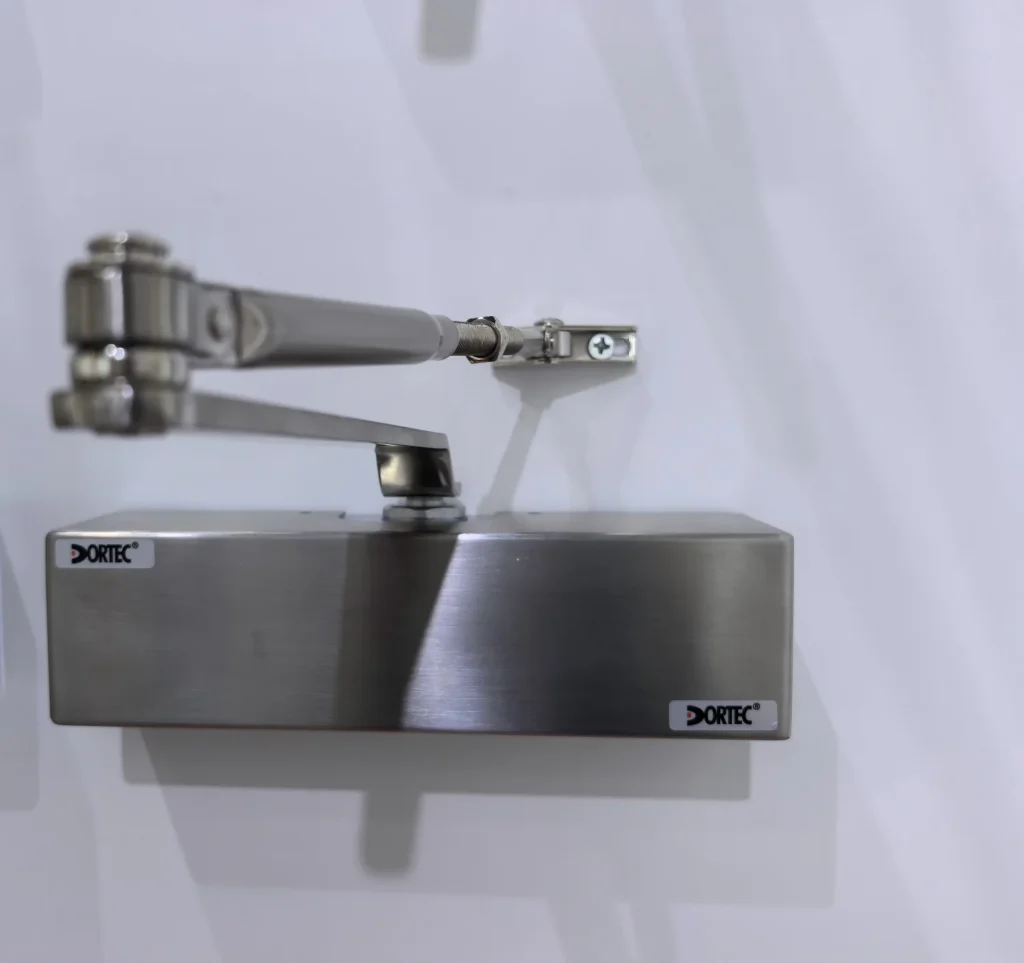
5.1 Door Size and Weight
Closers are rated by closing force (EN size):
• EN 2–3 → light doors
• EN 4–5 → standard commercial doors
• EN 6–7 → heavy industrial/fire doors
Choosing the wrong size may result in:
• Door not closing properly
• Excessive force
• Hardware damage
5.2 Fire Rating Compatibility
Ensure the closer matches the door rating:
• 60-minute fire doors
• 90-minute fire doors
• 120-minute fire doors
5.3 Traffic Frequency
High-traffic environments require:
• Heavy-duty construction
• High cycle testing (e.g., 500,000+ cycles)
5.4 Functional Features
Important features include:
• Backcheck → prevents door slamming
• Delayed action → slows closing for accessibility
• Adjustable speed → ensures proper latching
• Hold-open (fire compliant only) → must integrate with alarm
6.Common Mistakes in Fire Door Closer Selection
Even experienced buyers make these errors:
6.1 Using Non-Certified Products
This is the most serious mistake and can lead to rejection.
6.2 Incorrect Force Size
Too weak → door won’t latch
Too strong → difficult to open
6.3 Improper Installation
Misalignment affects:
• Closing speed
• Latching performance
6.4 Unauthorized Hold-Open Devices
Fire doors must not be held open unless:
• Connected to fire alarm systems
6.5 Ignoring Maintenance
Even high-quality closers fail without proper inspection.
FAQ
Are door closers required for all fire-rated doors?
Most fire doors require self-closing devices, making door closers essential in most installations.
What standard should a fire door closer meet?
Common standards include EN 1634, UL 10C.
Can I use a normal door closer on a fire door?
No, only certified fire-rated door closers are compliant.
How do I choose the correct door closer size?
Based on door weight, width, and usage frequency.
Do fire door closers need maintenance?
Yes, regular inspection ensures proper performance and compliance.
Conclusion
Fire-rated door closers are a small but essential component in any fire protection system. Without them, even the best fire-rated doors cannot perform their intended function.
For B2B buyers, the key priorities should always be:
• Certification and compliance
• Proper product selection
• Reliable performance
• Long-term durability
By choosing the right fire door closer, you not only ensure regulatory compliance but also enhance safety, reduce liability, and improve overall project quality.
At DORTEC, we manufacture and supply a full range of fire-rated door closers designed for commercial and industrial applications.
Our advantages:
• Certified to international standards (EN / UL)
• Suitable for 180 minutes fire doors
• Adjustable closing force and speed
• Tested for high-cycle durability
Whether you need surface-mounted, concealed, or heavy-duty solutions, we can support your project requirements with consistent quality and competitive pricing.
Send us your inquiry to receive product details and quotations.
