 Skip to content
 Introduction
Glass doors are widely used in modern commercial and public buildings thanks to their clean appearance, natural light transmission, and contemporary design. From retail storefronts and shopping malls to office buildings, airports, hospitals, and educational facilities, glass doors have become a standard architectural element.
However, when it comes to emergency egress and life safety, glass doors must be equipped with reliable and compliant exit hardware. This is where panic bars, also known as panic exit devices or crash bars, play a critical role.
A panic bar allows occupants to exit a building quickly and safely during an emergency by simply pushing the bar, without the need for keys, twisting motions, or specialized knowledge. For glass doors—especially frameless or narrow-stile aluminum doors—selecting the right panic bar requires careful consideration of door structure, safety regulations, certifications, and installation methods.
In this comprehensive guide, we will explore everything you need to know about panic bars for glass doors, including:
• How panic bars work
• Compatibility with different types of glass doors
• Panic bar types suitable for glass applications
• Code and safety requirements (UL, ANSI, CE, EN standards)
• Fire-rated vs non-fire-rated devices
• Exterior access and security options
• Installation best practices
• Maintenance and troubleshooting
• Buyer guidance for choosing the right panic hardware
This article is designed as a one-stop SEO resource for architects, project managers, contractors, distributors, and building owners looking for reliable panic bar solutions for glass doors.
What Is a Panic Bar (Exit Device)?
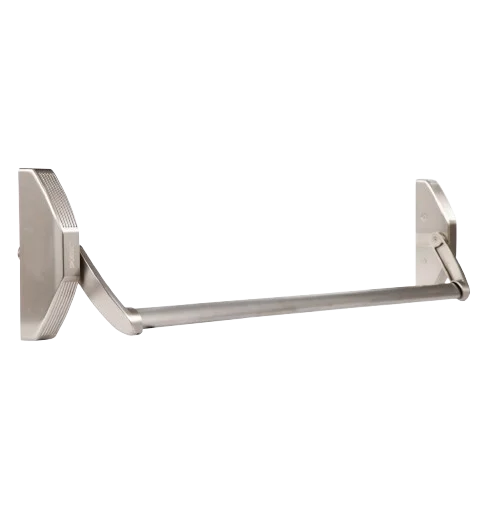
A panic bar, also called a panic exit device, crash bar, or push bar, is a door-mounted hardware mechanism designed to release a locked door when pressure is applied to the horizontal bar.
How a Panic Bar Works?
• Installed horizontally on the interior side of an exit door
• When the bar is pushed, the latch or locking mechanism retracts
• The door opens immediately in the direction of egress
• No keys, codes, or handles are required from the inside
The core purpose of a panic bar is life safety. In high-occupancy buildings, panic situations such as fires, power failures, or security incidents can cause confusion and crowd pressure.
Panic bars ensure that:
• Even untrained occupants can exit instantly
• Doors open under pressure from crowds
• Exit paths remain usable at all times
Although terminology varies by region, the function remains the same: fast, intuitive, and reliable emergency exit operation.
Glass Doors & Panic Bars: Compatibility Explained
Glass doors present unique challenges compared to wood or steel doors. Panic bars used on glass doors must be specially designed or configured to ensure safety, strength, and proper mounting.
Types of Glass Doors Used with Panic Bars
• Aluminum-framed glass doors (storefront doors)
• Narrow-stile glass doors
• Frameless tempered glass doors
• Double glass doors
• Glass doors with patch fittings
Key Compatibility Considerations
1.Door Structure
Glass doors do not provide the same internal reinforcement as metal doors. Panic bars must distribute force evenly without stressing the glass panel.
2.Glass Thickness
Common glass thicknesses include:10 mm (3/8”), 12 mm (1/2”),15 mm (5/8”).
Mounting systems and clamps must match the glass thickness precisely.
3.Frame or Frameless Design
• Framed glass doors allow standard rim or vertical rod devices
• Frameless glass doors require top/bottom latching or patch-mounted systems
4.Aesthetic Requirements
Glass doors are often chosen for their appearance. Panic bars for glass doors are frequently:
• Slim profile
• Aluminum or stainless steel finish
• Minimal visual obstruction
Choosing panic hardware specifically engineered for glass doors ensures both safety compliance and architectural harmony.
Suitable Types Panic Bars for Glass Doors
Different panic bar designs serve different door configurations and usage requirements. Below are the most common types used with glass doors.
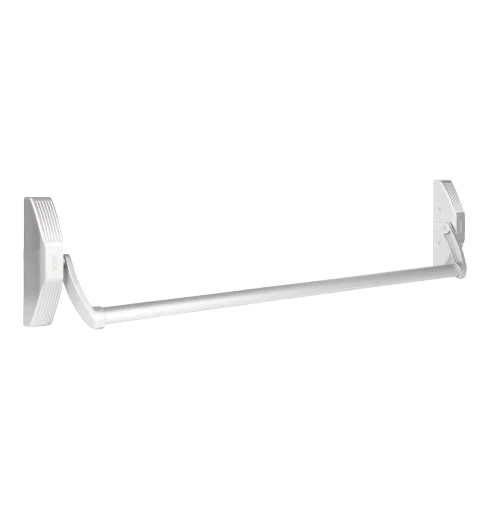
Surface Rim Exit Devices
A surface-mounted panic bar that latches into a strike mounted on the door frame.
Advantages:
• Simple and cost-effective
• Easy installation and maintenance
• Suitable for aluminum-framed glass doors
Limitations:
• Less secure for wide or double doors
• Not ideal for frameless glass doors
Best Applications:
• Single storefront glass doors
• Retail shops and offices
Vertical Rod Panic Bars for Glass Doors
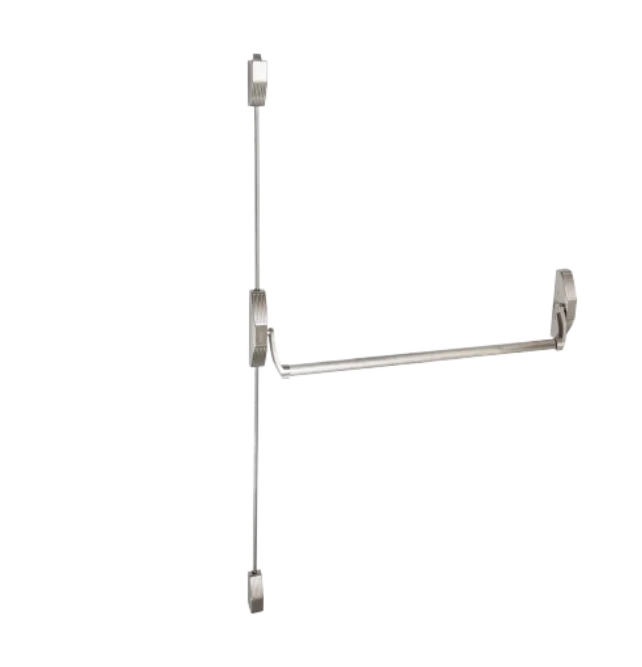
Vertical rod devices secure the door at two points—top and bottom—providing enhanced security and stability. there are two types of vertical rod panic bars
Surface Vertical Rod (SVR)
• Rods visible on door surface
• Strong locking at header and floor
• Common in commercial glass doors
Concealed Vertical Rod (CVR)
• Rods hidden inside the door or frame
• Cleaner appearance
• Preferred for modern glass architecture
Advantages of Vertical Rod Exit Device:
• Better security than rim devices
• Ideal for double glass doors
• Balanced force distribution
Best Applications of Panic Bars for Glass Doors:
• Shopping malls
• Airports
• Public buildings with large glass exits
Top & Bottom Latching Panic Bars (Glass-Specific)
Designed specifically for frameless glass doors, these systems do not rely on side frames.
Features:
• Latch engages at floor and overhead
• Uses patch fittings or clamps
• No drilling through glass panel
Advantages:
• Perfect for all-glass doors
• Minimal visual impact
• High safety compliance
Best Applications:
• Luxury retail stores
• Showrooms
• High-end commercial buildings
Electric & Alarmed Panic Bars
Some panic bars include additional functions:
• Alarmed panic bars emit sound when used
• Electric panic bars integrate with access control systems
Applications:
• Emergency exits that must remain secure
• Hospitals, schools, and restricted areas
Code & Safety Considerations
Panic bars are regulated hardware, and compliance with local building codes is mandatory. Requirements vary by region, but the objective is universal: safe and reliable emergency egress.
For North America follows UL & ANSI Standards like ANSI/BHMA A156.3, UL 305, UL 10c etc, and the key points are Panic bars required for high-occupancy buildings,Maximum operating force is regulated,Fire-rated doors require fire-rated panic hardware
European Market uses CE Marking & EN Standards,panic bars must comply with the Construction Products Regulation (CPR) and carry CE marking.For glass doors in public buildings, EN 1125 certified panic bars are essential.
| Aspect | UL / ANSI | CE / EN 1125 |
| Region | USA / Canada/South American/Middle East | Europe / UK/Middle East/ Asia |
| Certification | UL Listed | CE Marked |
| Standard | ANSI A156.3 | EN 1125 |
| Focus | Performance & fire | Public safety & usability |
| Legal Requirement | Code driven | Mandatory for sale |
Fire-Rated vs Standard Panic Bars
Not all panic bars are fire-rated, and choosing the wrong type can cause compliance issues.
Fire-Rated Panic Bars
• Used on fire exit doors
• Must automatically latch (no dogging)
• Certified to UL 10C or EN fire standards
Non-Fire-Rated Panic Bars
• Used on non-fire exit doors
• May allow mechanical dogging
• Greater flexibility in operation
Important:Always verify door fire rating before selecting panic hardware.
Exterior Access Options & Security Features
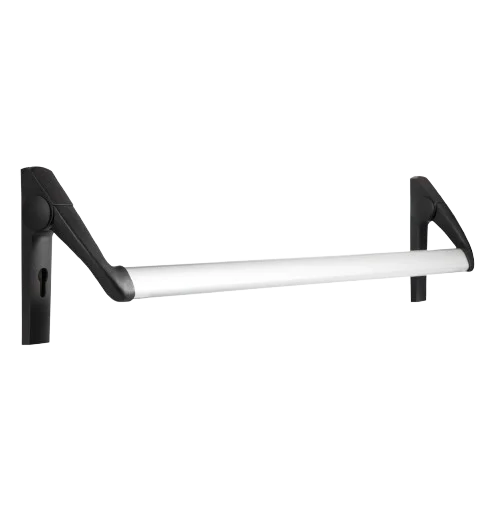
While panic bars allow free exit from inside, exterior access may require control.
Common Exterior Options
• Key cylinder
• Lever handle
• Knob trim
• Thumb turn
Advanced Features
• Electric latch retraction
• Access control integration
• Delayed egress
• Alarmed exit
For glass doors, exterior hardware must match:
• Door material
• Frame profile
• Aesthetic requirements
DORTEC Panic Bars for Glass Doors Picks (Examples)
Include a mix of products from entry-level to commercial grade:
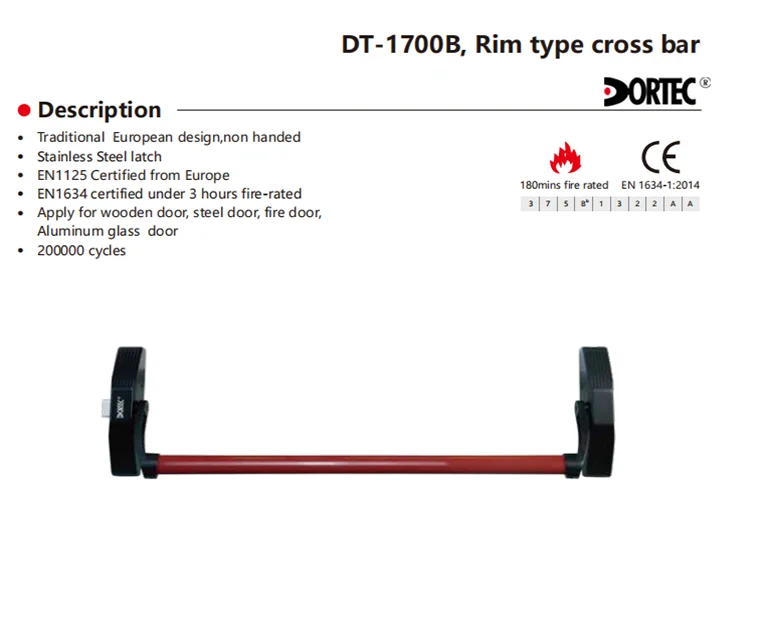
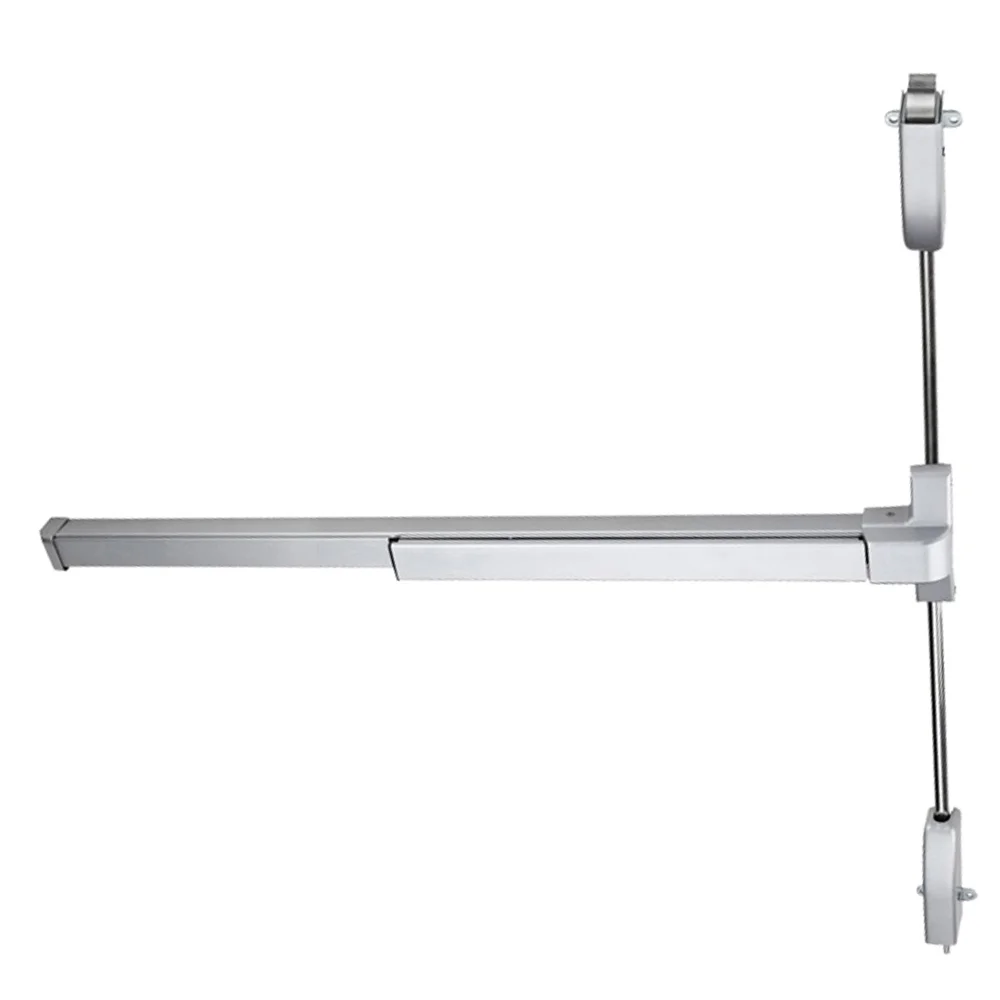

DT-1700 SERIES Fire Rated Push Bars For Exit Doors-Fire rated option
DT-1500 SERIES Panic Exit Device UL Panic Rated–Budget -Friendly Option.
DT-1700 Series Vertical Rod Panic Bar– Ideal for double glass doors.
DT-1700 Series Commercial Surface goods for glass storefronts.
Frequently Asked Questions
Can all panic bars be used on glass doors?
No, not all panic bars can be used on glass doors.
Conclusion
Panic bars for glass doors are a critical safety component in modern commercial and public buildings. Choosing the right panic hardware requires careful evaluation of:
• Door type and structure
• Local building codes
• Certification requirements (UL, CE, EN 1125)
• Fire rating
• Security needs
• Installation quality
With proper selection and installation, panic bars provide reliable emergency egress, regulatory compliance, and seamless integration with glass door designs.
For projects involving aluminum-framed glass doors, frameless glass entrances, or international compliance requirements, working with an experienced panic hardware manufacturer ensures both safety and performance.
